Carrie Web Series Review: Is Amazon Prime’s Supernatural Horror Worth Watching? | MovieUnit
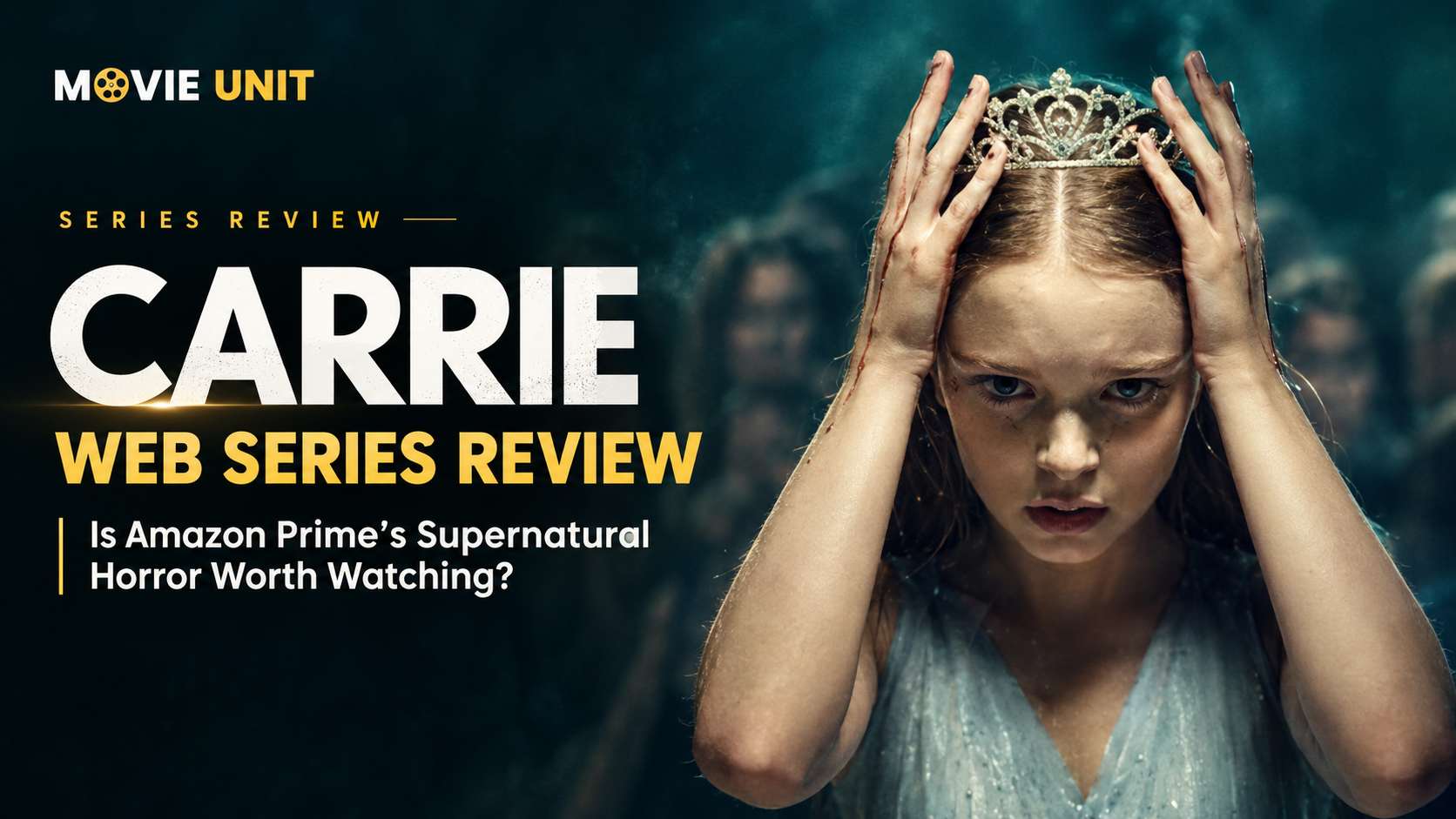
Some horror stories scare you with monsters, some with supernatural powers, and others with the cruelty of ordinary people. Carrie brings all three together in a disturbing story about bullying, isolation, religious fanaticism, and a young girl pushed beyond her limits.
Streaming on Amazon Prime Video, Carrie is a new eight-episode adaptation of Stephen King’s famous 1974 horror novel, developed by Mike Flanagan. Starring Summer H. Howell as Carrie White and Samantha Sloyan as her mother, Margaret White, the series brings this classic story into the modern world, where school bullying can follow a teenager home through social media.
Watch the Latest Short
Watch the latest video, trailer or short clip.
But does this new version offer enough fresh ideas to justify revisiting a story that has already been adapted several times? Does its longer format give the characters more depth, or does it take away some of the original story’s terrifying impact?
At MovieUnit, we look beyond the jump scares to explore the performances, storyline, atmosphere, strengths, weaknesses, and overall viewing experience. Here is our complete Carrie web series review, including whether horror fans should add it to their watchlist.
Carrie Web Series: Quick Details
Carrie Web Series: Quick Details
| Series Title | Carrie |
|---|---|
| Genre | Supernatural Horror, Drama, Thriller |
| Based On | Carrie by Stephen King |
| Creator / Showrunner | Mike Flanagan |
| Lead Actress | Summer H. Howell |
| Other Cast Members | Samantha Sloyan, Siena Agudong, Alison Thornton, and other supporting performers |
| Episodes | 8 |
| Streaming Platform | Amazon Prime Video |
| Release Date | October 7, 2026 |
| Language | English |
| MovieUnit Verdict | A thoughtful, unsettling horror drama with a modern perspective. |
The series premiered on Prime Video on October 7, 2026, with all eight episodes available to stream. Mike Flanagan serves as showrunner, writer, and executive producer, and directs several episodes. Stephen King is also an executive producer on the adaptation.
Where to Watch?
Where to Watch Carrie Web Series?
Want to watch Carrie? Check Amazon Prime Video for streaming availability in your region.
Watch on Amazon Prime Video →Availability may vary by country and subscription plan.
Carrie Web Series Story: What Is It About?
At the heart of Carrie is Carrie White, a quiet and sheltered teenage girl whose life is shaped by fear, isolation, and the strict beliefs of her family. She has spent much of her life away from the ordinary experiences of other teenagers, leaving her poorly prepared for the complicated social world outside her home.
Following a major change in her family circumstances, Carrie is exposed to a world that is far less forgiving than she expects. School should be a place where she can learn, build friendships, and discover who she is. Instead, she finds herself facing humiliation, cruelty, and the social pressures that make adolescence difficult even for those who have supportive families.
Her problems do not end when the school day is over. Her relationship with her deeply religious mother, Margaret, adds another layer of tension to her life. Margaret’s beliefs and controlling behaviour influence how Carrie understands her own body, emotions, and place in the world.
At the same time, Carrie begins to discover that she possesses extraordinary telekinetic abilities. She can move objects and exert force through the power of her mind, turning her intense emotions into something potentially dangerous.
Initially, these powers make her situation more mysterious than frightening. But as the pressure around her increases, the question becomes increasingly disturbing: what happens when a vulnerable teenager discovers that she possesses the power to fight back against the people who have hurt her?
The story builds towards the infamous prom-night catastrophe associated with the Carrie franchise. However, this television adaptation expands the familiar narrative with additional characters, modern technology, and supernatural elements that take the story beyond a straightforward retelling of the original novel.
The result is a story that combines supernatural horror with a recognisable fear: the possibility that a person’s suffering can be ignored for so long that the consequences become impossible to control.
Carrie Review: A Modern Take on a Classic Horror Story
The biggest challenge facing any new adaptation of Carrie is its familiarity. Stephen King’s novel has inspired multiple screen versions, and the 1976 film directed by Brian De Palma remains particularly influential.
Audiences already know the basic ingredients: a bullied teenager, an oppressive home environment, frightening supernatural abilities, and a school event that turns into a nightmare.
Mike Flanagan’s version attempts to make the story feel relevant to a generation growing up with smartphones, social media, and online humiliation. Instead of treating bullying as something that happens only in school corridors, the series explores how digital platforms can extend cruelty into every part of a teenager’s life.
A photograph, a rumour, or a humiliating post can spread beyond the control of the person being targeted. The audience understands that Carrie is not simply dealing with a few unpleasant classmates. She is confronting a social environment in which public embarrassment can become permanent and where the people responsible may feel protected by distance and anonymity.
This modern perspective gives the series a meaningful reason to exist. It does not completely abandon the central ideas of King’s story, but it changes the context in which they unfold.
The result is not horror built exclusively around supernatural surprises. It is also a drama about the emotional consequences of exclusion, the influence of family, and the danger of treating another person’s suffering as entertainment.
Summer H. Howell as Carrie White: The Emotional Centre of the Series
A successful adaptation of Carrie depends heavily on its lead performance. The character must feel vulnerable enough for the audience to understand her suffering, but complex enough that her growing power creates genuine unease.
Summer H. Howell takes on this demanding role in the 2026 series.
Carrie is not an ordinary horror protagonist who simply reacts to strange events. She is a young person trying to understand herself while navigating an environment that offers her very little emotional security. Her silence, discomfort, and difficulty connecting with others become essential parts of the character.
The performance needs to communicate more than fear. Carrie must also express confusion, loneliness, curiosity, anger, and the desire to be accepted. These emotions help the audience understand why the discovery of her powers matters to her beyond their ability to cause destruction.
The more clearly the series establishes Carrie’s vulnerability, the more unsettling her transformation becomes. Her abilities do not erase the person she was before discovering them. Instead, they make her internal struggles visible in ways that other people cannot easily ignore.
This is one of the adaptation’s most important strengths. Carrie is not simply presented as a supernatural threat; she is also a teenager whose need for kindness and belonging has repeatedly gone unmet.
Viewers familiar with earlier adaptations may inevitably compare Howell’s portrayal with previous interpretations of the character. However, this series aims to establish its own identity rather than simply reproduce a performance audiences already know.
Samantha Sloyan as Margaret White
Carrie’s relationship with her mother is one of the most uncomfortable aspects of the story.
Margaret White is a deeply religious and controlling parent whose worldview shapes almost every part of her daughter’s life. Instead of helping Carrie understand the outside world, she creates an environment in which fear and shame become powerful influences.
Samantha Sloyan plays Margaret, bringing an important psychological dimension to the family dynamic.
The most interesting aspect of their relationship is that the danger does not come only from supernatural forces. It also comes from the way a parent can use authority, belief, and emotional pressure to restrict a child’s independence.
Margaret’s behaviour raises difficult questions about the difference between protecting someone and controlling them. Her understanding of morality and faith clashes with Carrie’s growing need to experience life on her own terms.
The series also gives its characters more room to develop than a feature film typically allows. This expanded format makes the family relationship an ongoing source of tension rather than a background detail.
However, viewers who prefer Margaret to be portrayed as an unambiguously terrifying antagonist may find the adaptation’s more layered approach less satisfying. By giving characters additional context and complexity, the series sometimes shifts attention away from the stark emotional conflict that made the original story so disturbing.
Supporting Cast and Character Development
The supporting characters are important because Carrie’s tragedy cannot be understood entirely through her relationship with her mother. The school environment, the behaviour of her classmates, and the reactions of adults all contribute to the situation around her.
Siena Agudong and Alison Thornton are among the performers who help bring the social conflicts of the story to life.
The series explores how teenagers can participate in cruelty for different reasons. Some characters may act out of insecurity, others because they want social approval, and others because they underestimate the consequences of their behaviour.
This approach adds complexity to the story. Bullying is rarely experienced by its target as a series of isolated incidents; it can be reinforced by the people who actively participate, those who encourage it, and those who watch without intervening.
The expanded television format gives the show opportunities to explore these dynamics in greater detail. Nevertheless, the additional storylines may occasionally compete with the central relationship between Carrie and Margaret.
For viewers who enjoy character-driven drama alongside horror, the supporting cast adds useful depth. Those looking primarily for a fast-moving supernatural thriller may find some of the character-focused sections slower than expected.
Direction and Atmosphere: Where Carrie Builds Its Horror
Mike Flanagan’s adaptation approaches horror through a combination of psychological tension, disturbing situations, and supernatural escalation.
Rather than depending entirely on sudden shocks, the series allows unease to develop through the characters and their surroundings. Carrie’s isolation is central to the atmosphere: even ordinary interactions can feel threatening when the person experiencing them has learned to expect humiliation or rejection.
The supernatural elements gain much of their impact from this emotional foundation. Carrie’s abilities are frightening not merely because they are powerful, but because they emerge within a life already filled with fear and frustration.
The series also builds towards the prom sequence, one of the most recognisable moments in the Carrie story. Reimagining this event for a television production presents a substantial creative challenge. The scene must satisfy audiences familiar with earlier versions while creating a distinct emotional experience for newcomers.
The expanded adaptation gives the filmmakers more room to establish the characters and circumstances leading to the catastrophe. As a result, the sequence can be understood not only as a major horror set piece but also as the culmination of the conflicts that have been developing throughout the story.
Still, the series is not necessarily frightening in every episode. Some stretches prioritise character development and thematic exploration over immediate suspense. That choice may appeal to viewers who enjoy thoughtful horror, although fans seeking relentless scares may want a more consistently intense experience.
The Biggest Strength: Cyberbullying and Teenage Isolation
One of the most relevant aspects of the new Carrie is its treatment of bullying in a connected world.
In earlier eras, a humiliating incident might have remained within a school or local community. Today, social media can allow embarrassing material to circulate far beyond its original audience.
The series uses this modern reality to expand the sense of pressure surrounding Carrie. Her struggle is not simply about finding a place among her classmates. It is also about facing a world in which other people can turn her vulnerability into public entertainment.
This is particularly effective because the supernatural story and the contemporary social themes reinforce one another. Carrie’s powers may be extraordinary, but the cruelty directed at her is recognisable.
The show also encourages viewers to think about the responsibility of bystanders. People who share humiliating content, encourage a cruel joke, or remain silent when someone is being targeted may contribute to an environment that makes the victim feel increasingly alone.
That does not mean the series presents a simple explanation for every character’s behaviour. Instead, it uses horror to examine the consequences of collective cruelty and the ease with which people can underestimate the harm they cause.
For younger audiences, parents, and viewers interested in psychological drama, this theme gives Carrie relevance beyond its supernatural premise.
What Does Not Work as Well?
Despite its strengths, Carrie is not a flawless adaptation.
1. The story may feel familiar
The basic premise has been revisited so many times that some viewers will know where the story is heading. The modern setting and expanded character arcs help, but they cannot completely remove the familiarity of the central narrative.
For audiences who have watched the earlier films, the biggest question may not be what happens but whether the new version adds enough to make the journey worthwhile.
2. The expanded format affects the pacing
An eight-episode adaptation has more time to explore its characters than a two-hour film. That additional space can be valuable, particularly when examining Carrie’s family life and social isolation.
However, a longer format also creates the risk of stretching certain developments beyond their natural length. Viewers who prefer tightly constructed horror films may feel that some sections could have moved faster.
3. The supernatural additions may divide fans
The new series broadens the mythology around Carrie with additional supernatural ideas and characters. These changes allow Flanagan to explore a larger story world rather than simply recreate the familiar plot.
For some viewers, this expansion will make the adaptation feel ambitious and fresh. Others may prefer the more focused approach of King’s original novel, in which Carrie’s story remains the primary source of horror.
The additional mythology can also affect how viewers interpret Carrie’s responsibility for the events that unfold. This is a significant creative choice, and its success will depend on whether audiences find the expanded story emotionally convincing.
4. Psychological drama sometimes takes priority over scares
The series is interested in the emotional and social circumstances behind its horror. Consequently, not every episode aims to deliver a major fright.
That approach gives the story more depth, but it may disappoint viewers expecting a consistently terrifying supernatural thriller. The tension often comes from anticipating what might happen rather than from constant jump scares.
Is Carrie Worth Watching on Amazon Prime Video?
The answer depends on what you want from a horror series.
If you are looking for a story that combines supernatural powers with psychological drama, family conflict, and commentary on modern bullying, Carrie offers plenty to discuss. Its contemporary setting provides a clear reason to revisit the material, and the eight-episode structure gives the characters room to develop.
The series is also a natural choice for viewers interested in Stephen King’s stories and Mike Flanagan’s approach to horror. Rather than treating the source material as a sequence of familiar events, the adaptation attempts to examine its central ideas from a different perspective.
However, it may not satisfy everyone. Fans of the 1976 film may find the changes difficult to embrace, while viewers looking for fast-paced scares could find the character-driven sections slow.
Our recommendation is to approach Carrie as a modern psychological horror drama rather than expecting a scene-for-scene recreation of the earlier film. That makes it easier to appreciate the new interpretation on its own terms.
Who Should Watch Carrie?
You should consider watching Carrie if:
- You enjoy supernatural horror with psychological depth.
- You are a fan of Stephen King’s novels and screen adaptations.
- You like Mike Flanagan’s character-driven approach to horror.
- You are interested in stories about bullying, isolation, and complicated family relationships.
- You enjoy multi-episode horror dramas that develop their characters over time.
You may want to skip it if:
- You prefer short, tightly paced horror movies.
- You want constant jump scares and immediate action.
- You strongly prefer adaptations that remain close to the original source material.
- You dislike stories involving school bullying, emotional abuse, or disturbing family dynamics.
Carrie Web Series Rating: MovieUnit Verdict
Here is our editorial assessment of the series across several viewing categories.
MovieUnit Overall Rating: 3.5/5
These scores represent our editorial assessment of the series’ storytelling approach, performances, atmosphere, and pacing rather than an official industry rating.
The strongest elements are the central performance, the exploration of teenage cruelty, and the decision to bring the story into a world shaped by social media. The main drawbacks are the uneven pacing and the creative changes that may not appeal to every fan of the original.
Ultimately, Carrie works best when it focuses on the emotional experience of its central character. The supernatural horror is important, but the story’s most unsettling moments emerge from the way ordinary people treat someone they do not understand.
Final Verdict: Should You Add Carrie to Your Watchlist?
Carrie is more than another attempt to recreate a famous horror story. By exploring bullying, family control, teenage isolation, and the consequences of humiliation in a digital age, the series offers a contemporary interpretation of Stephen King’s classic premise.
Summer H. Howell leads the adaptation as Carrie White, while Samantha Sloyan brings tension and complexity to the role of Margaret. Mike Flanagan’s direction gives the story room to explore its characters and expand its supernatural mythology.
Not every creative decision will work for every viewer. The extended format can affect the pace, and the additional supernatural elements may divide audiences who prefer a more focused retelling. Nevertheless, the series has enough thematic ambition and emotional tension to make it worth considering.
MovieUnit’s verdict: Carrie is worth watching for fans of psychological horror, Stephen King adaptations, and character-driven supernatural dramas. Go in expecting an unsettling exploration of human cruelty as much as a traditional horror story.
If you enjoy horror that leaves you thinking about the characters after the credits roll, add Carrie to your watchlist on Amazon Prime Video.
Frequently Asked Questions About Carrie
The 2026 Carrie series is available on Amazon Prime Video. All eight episodes premiered on the platform on October 7, 2026. Availability and subscription requirements may vary by region.
Summer H. Howell plays Carrie White in the 2026 adaptation. Samantha Sloyan plays her mother, Margaret White.
Mike Flanagan developed the television adaptation and serves as its showrunner, writer, and executive producer. He also directs several episodes.
The first season consists of eight episodes, allowing the story to explore its characters and conflicts over a longer format than a feature film.
No. Carrie is a fictional horror story based on Stephen King’s 1974 novel. Its supernatural events are fictional, although its themes of bullying, isolation, and social pressure reflect real-world experiences.
Yes. The series expands the original story into an eight-episode format, updates the setting for the modern era, and introduces additional characters and supernatural elements. It retains the central premise of Carrie White, her telekinetic abilities, and the cruelty she experiences.
The series explores bullying, emotional abuse, disturbing violence, and supernatural horror. Parents and guardians should check the current regional age rating and content advisories before deciding whether it is appropriate for younger viewers.
If you enjoy psychological horror, Stephen King adaptations, and stories that explore the consequences of cruelty, Carrie is worth considering. Viewers who prefer fast-paced horror or a closer recreation of the original film may have mixed reactions.
A second season should not be treated as confirmed unless Prime Video or the show’s creators officially announce it. Check official Prime Video updates for the latest information.
MovieUnit gives Carrie an editorial rating of 3.5 out of 5 stars, recognising its performances and modern themes while noting its pacing issues and divisive changes to the original story.
Have you watched Carrie on Amazon Prime Video? Share your thoughts in the comments. Did the modern retelling work for you, or do you prefer the original film?











Post Comment